









Infrared Heating Thermal Desorption Spectrometer ESCO-TDS1200II IR
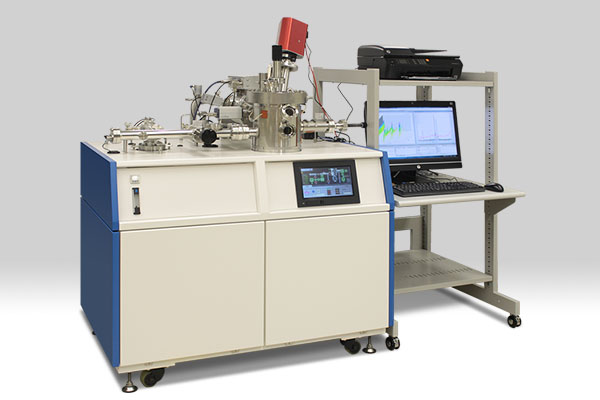 Infrared Heating Thermal Desorption Spectrometer ESCO-TDS1200II IR
Features
The Infrared Heating Thermal Desorption Spectrometer ESCO-TDS1200II IR is an analytical instrument that utilizes a quadrupole mass spectrometer (QMS)
to observe in real-time the molecules desorbed from a sample as it is heated with infrared radiation at a programmed temperature rate under an ultra-high vacuum environment (10-7Pa or lower).
Compared to thermal analysis systems that heat samples in an atmospheric pressure environment (105Pa), this system allows for observation in a low-background environment.
Even atmospheric components (such as water, hydrogen, oxygen, nitrogen, and carbon dioxide), which are difficult to maintain at low background levels in an atmospheric environment, can be observed with high sensitivity.
In addition, its design ensures that only the sample is heated. This prevents an increase in the background even in the high-temperature range, enabling the highly sensitive observation of desorbed molecules.
It is capable of identifying and quantifying the chemical species of molecules desorbed from the sample. It can also provide information regarding the adsorption and bonding states of the desorbed molecules,
as well as their diffusion processes.
It is optimal for measuring thin film and thin plate samples. The new ESCO-TDS1200II IR features an upgraded system from the conventional TDS1200,
adopting a touch panel for its interface. It meets the standards for CE marking.
[References]
●The Japan Society of Vacuum and Surface Science (Ed.). Illustrated Handbook of Surface Analysis. Asakura Publishing, 2021,
Chapter V: Others. Section 25: Desorption Analysis Methods.
Part 1: Thermal Desorption Spectroscopy (Shohei Ogura): 464-469.
●Norio Hirashita, Tsuneo Ajioka, and Yasushi Hinaga. "Development of a new thermal desorption spectroscopy apparatus and its application to evaluation of VLSI materials and processes."
Journal of the Vacuum Society of Japan, 1991, 34(11): 813-819.
●Norio Hirashita and Taizo Uchiyama. "Quantitative analysis of outgassing from semiconductor integrated circuit materials
by thermal desorption spectroscopy." Bunseki Kagaku, 1994, 43(10): 757-764.

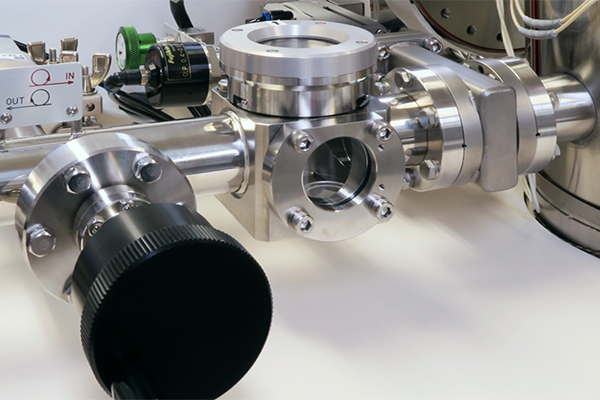 Load Lock Chamber Configuration
Equipped with a Load-Lock Chamber
A load-lock chamber is essential for achieving both high measurement throughput and maximum sensitivity.
Our engineered load-lock chamber and sample transfer mechanism allow for the rapid introduction of only the sample into the ultra-high vacuum (UHV) analysis chamber.
Without a load-lock chamber, the analysis chamber must be vented to the atmosphere every time a sample is exchanged.
Once exposed to ambient air, a massive volume of atmospheric components—particularly moisture—adheres to the chamber's interior surfaces,
requiring a prolonged pump-down time before the system can return to its optimal vacuum level
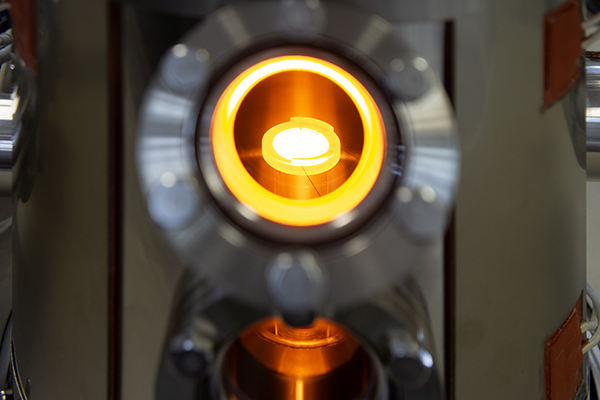 Image of Infrared Heating System
Infrared Heating System
In Thermal Desorption Spectroscopy (TDS), it is crucial to prevent the analysis chamber and its internal components from being heated while warming the sample.
In conventional TDS systems where the chamber itself absorbs heat, distinguishing between gases desorbed from the sample and those outgassed from the chamber walls becomes notoriously difficult.
The TDS1200II solves this fundamental challenge by directly heating the sample using infrared light introduced through a specialized quartz rod.
Because the thermal energy is focused strictly on the specimen, any rise in background noise is kept to an absolute minimum even in high-temperature ranges, enabling exceptionally high-sensitivity measurements.
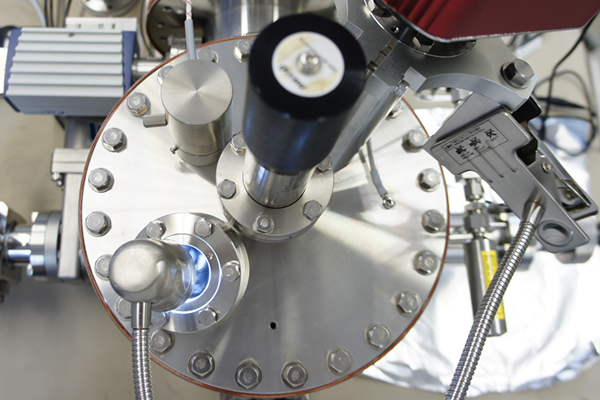 Strategic Placement of the Quadrupole Mass Spectrometer (QMS)
Strategic Placement of the Quadrupole Mass Spectrometer (QMS)
To achieve the highest possible sensitivity for desorbed gas detection, the QMS ionization chamber is positioned directly above the specimen.
This direct, line-of-sight configuration allows gases desorbed from the sample to travel straight into the ionization chamber without interacting with the chamber walls.
Consequently, the system can flawlessly detect even metals prone to deposition or high-molecular-weight organic molecules with exceptional sensitivity, completely eliminating data loss caused by surface condensation.
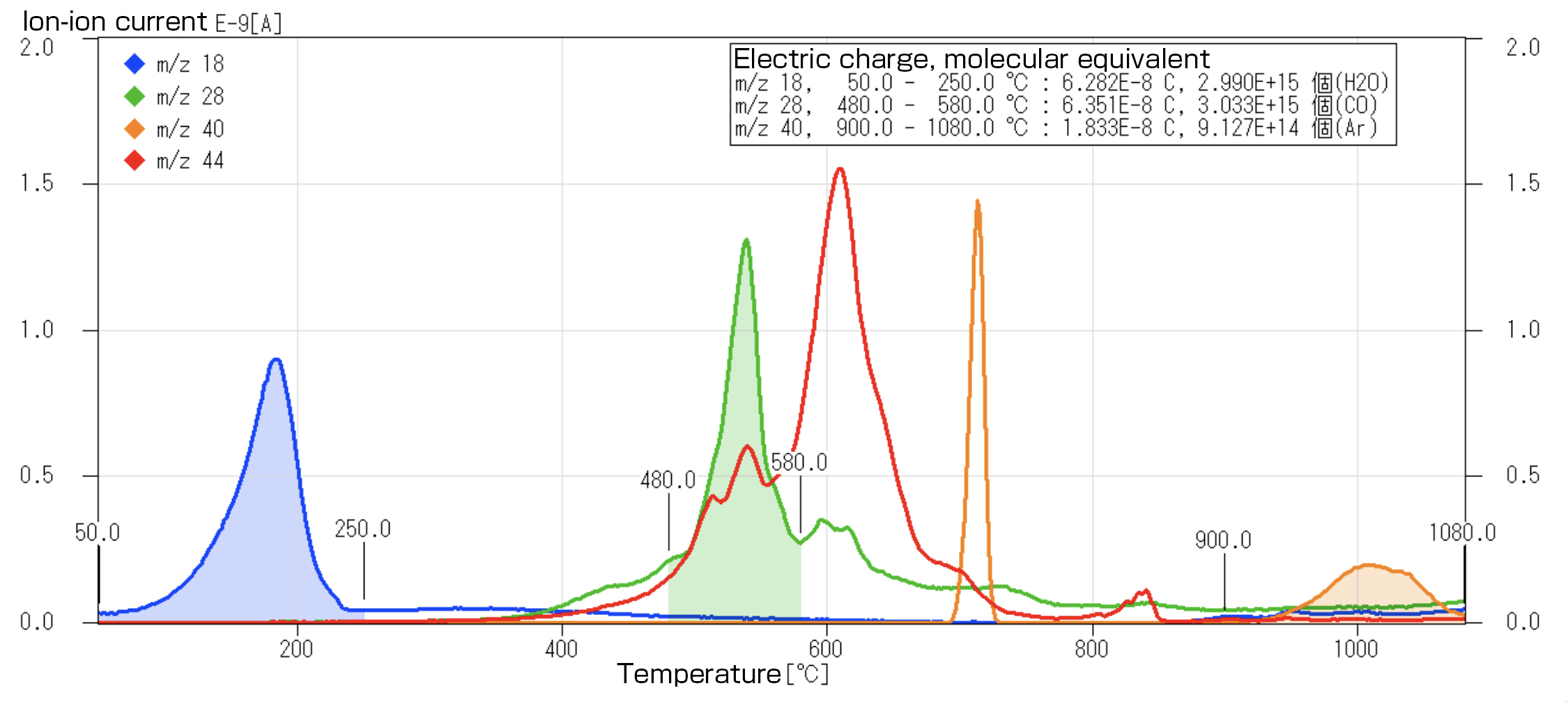
Quantification of Desorbed Gases
Our advanced data processing software enables the precise quantification of desorbed gases.
To maintain this high level of quantitative accuracy, periodic sensitivity calibration of the mass spectrometer is indispensable.
Traditional calibration using standard leaks, however, requires investing in multiple expensive standard leak bottles—one for each specific gas species—making the entire process highly time-consuming and costly.
Furthermore, handling and managing standard leaks for toxic gases introduces stringent workplace health and safety compliance challenges.
Our innovative quantification program completely overcomes these bottlenecks, delivering a significantly faster, simpler, and safer alternative to conventional standard leak approaches.
Highly accurate and reproducible results can be achieved simply by periodically measuring our proprietary, NIST-traceable hydrogen reference standards.
Moreover, the revolutionary sensitivity correction method developed by our engineering team extends this calibration capability to non-hydrogen gases as well.
This proprietary method has been rigorously validated to show excellent agreement with quantitative data calibrated via standard leaks tied directly
to the national standards of the National Institute of Advanced Industrial Science and Technology (AIST) in Japan.
[References]
● Norio Hirashita, Makoto Urano, and Hajime Yoshida. "Outgassing measurement in the field of analysis."
Journal of the Vacuum Society of Japan, 2014, 57(6): 214-218.
Technical Description: Thermal Desorption Spectroscopy (TDS)
This reference material provides information on desorption models and methods for determining activation energy used in the analysis of Thermal Desorption Spectroscopy.
Note: Clicking the link will open a PDF file.
*A PDF file will open.
Technical Description: Quantitative Analysis (Quantification in TDS Systems)
This material is based on the report by Hirashita and Uchiyama: "N. Hirashita and T. Uchiyama, BUNSEKI KAGAKU, 43, 757 (1994)."
The quantification of desorbed gases can be performed using thermal desorption spectra measured with a TDS system.
When the pumping speed of the measurement chamber is sufficiently large compared to the change in pressure caused by the desorbed gas,
the change in the partial pressure of the desorbed gas is proportional to the amount of desorption per unit time (desorption rate).
In a mass spectrometer, since the ion current is proportional to the partial pressure, the ion current is ultimately proportional to the desorption rate.
Therefore, the total amount of desorption can be calculated from the integrated area intensity of the ion current.
By pre-determining the proportionality coefficient between the area intensity and the desorption amount using a Silicon (Si) sample implanted with a known dose of H+,
the amount of hydrogen desorption for various samples can be determined based on the area intensity of m/z2.
Furthermore, for molecules other than hydrogen, the proportionality coefficient for the target molecule can be calculated using parameters such as the relative ionization cross-section (ionization difficulty),
fragmentation factor, and transmission rate between hydrogen and the target molecule. Using this proportionality coefficient, the quantification of various molecular species beyond hydrogen is also possible.

Thermal Desorption Spectrometer TDS1200II [Option]
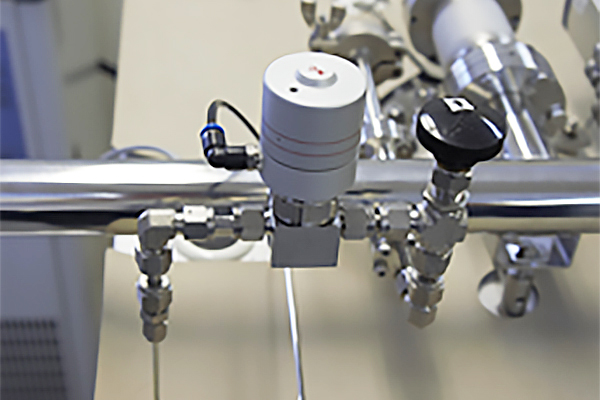 Switch-type valve section
Gas Purge for Powder Samples
This is a mechanism that purges the load-lock chamber with gas without scattering fine powder samples.
| Purpose | ・Purging a load-lock chamber that contains a powder sample can cause the sample to scatter. ・A switch-type valve is adopted in the purge line. ・It is easy to operate and eliminates the scattering of samples. |
|---|---|
| Components | ・Slow leak valve assembly (Stainless steel [SUS] piping, needle valve, etc.) |
| Applicable Models | ・TDS1200Ⅱ ・TDS1200 ・EMD-WA1000S/W ・EMD-WA1000S |
Transfer Vessel
Enables the introduction of samples prepared in an anaerobic environment, such as a glove box, into the load-lock chamber without exposure to the atmosphere.
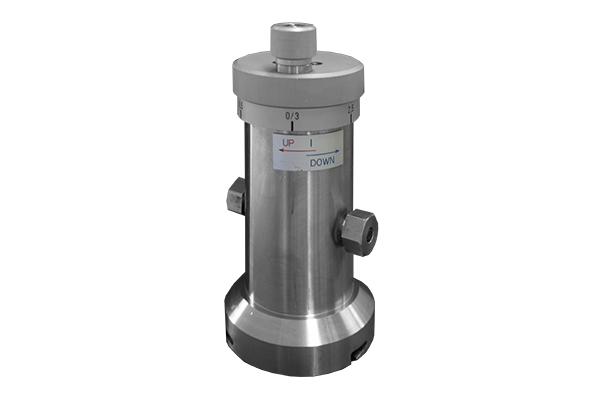
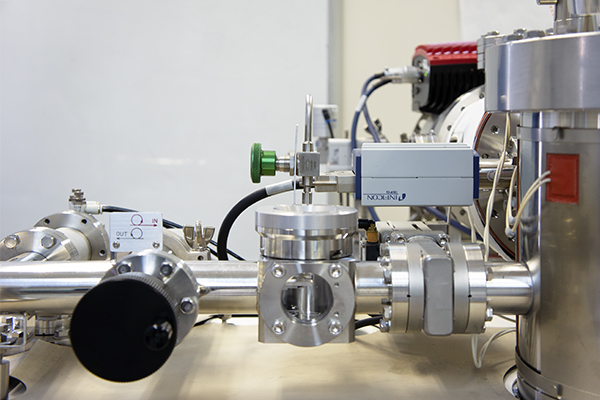
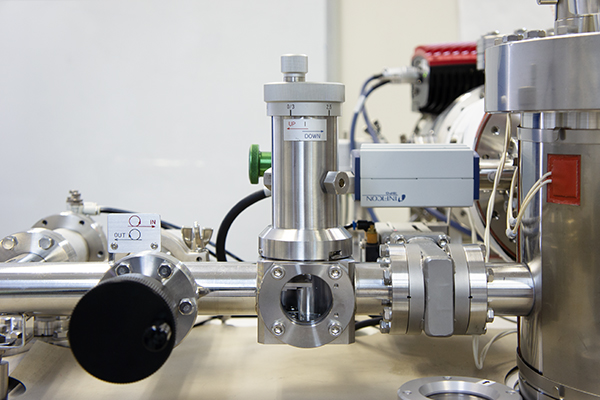
| Specifications | ・Atmosphere exchange rate = 1.5 MPa → 1.5 MPa (after 48 hours) |
|---|---|
| Components | ・Transfer vessel (optional pressure gauge available) ・Load-lock chamber for attaching the transfer vessel |
| Applicable Models | ・TDS1200Ⅱ ・TDS1200 ・EMD-WA1000S/W ・EMD-WA1000S |
| Other | ・Individual parts are also sold separately. ・When attaching this to a TDS system, modification of the load-lock chamber is required. |
Sample Stage Exchange Mechanism
The sample stage can be exchanged without venting the main chamber to the atmosphere.
You can easily switch between a transparent stage and a SiC stage depending on the heating conditions.
It also provides peace of mind, as the stage can be quickly replaced if it becomes contaminated due to sample sublimation.
Cooling Water Circulator (Chiller)
Circulation of cooling water is required to cool the infrared focusing mirror.
If there is no cooling water supply facility in the installation environment, we recommend using a cooling water circulator.
You can choose from standard single-function circulators to models equipped with various optional features.
In combination with a water leak sensor, the system can be configured to automatically shut off the circulator and infrared heating when a water leak is detected.
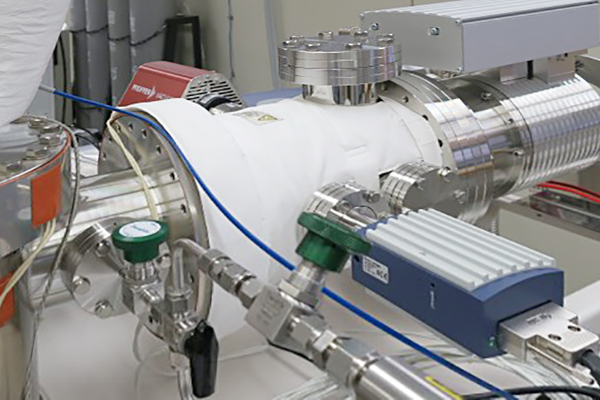 QMS Manifold
QMS Manifold
Provides a mounting space for the QMS analyzer tube between the main chamber and the turbomolecular pump.
This reduces metal deposition on the analyzer tube, preventing the degradation of QMS sensitivity.
Furthermore, by installing a liquid nitrogen trap, the amount of hydrogen in steel can be determined with even higher precision.
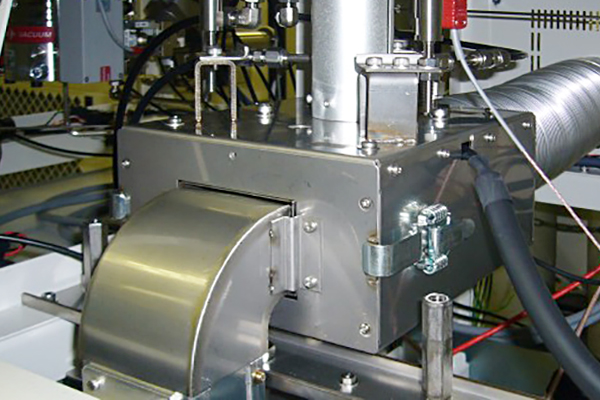
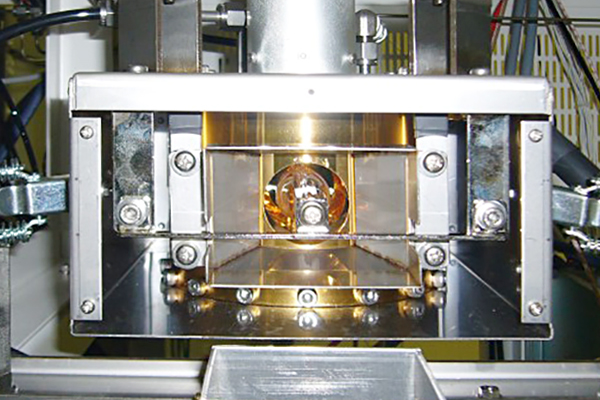
2kW Heating Source
Raises the standard upper heating limit from 1200°C to 1400°C.
Consumables
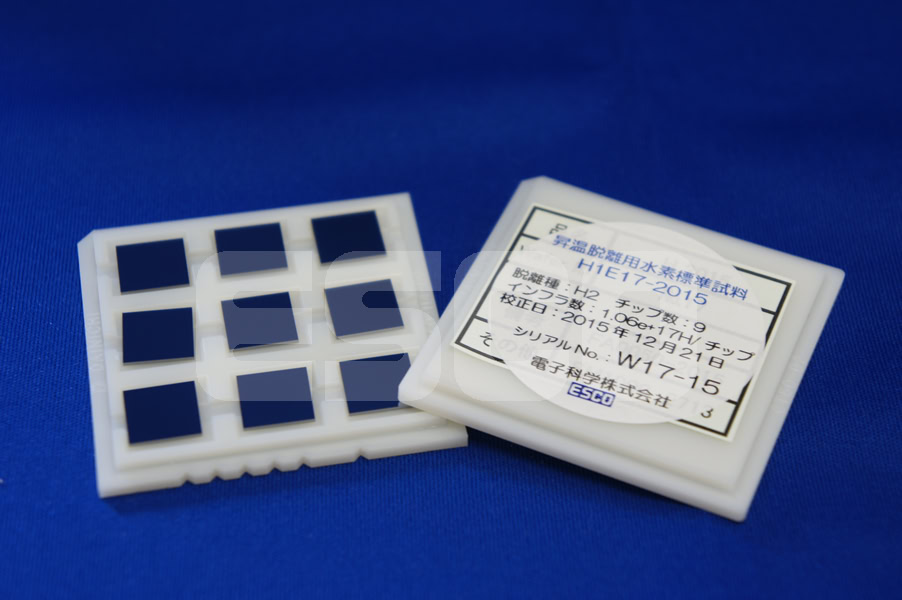
| Standard Samples | ⇒Hydrogen-Implanted Standard Sample | |||
|---|---|---|---|---|
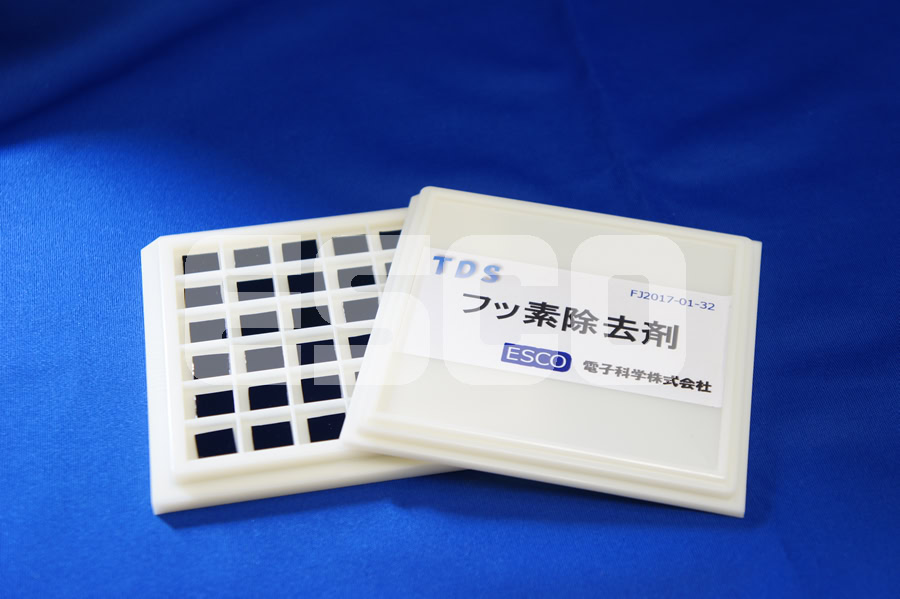
| F Removal Agent | ⇒Fluorine (F) Removal Agent | |||
| Sample Stage | ⇒Sintered SiC Sample Stage | ⇒Circular Transparent Sample Stage | ⇒Quartz Ring Stage | |
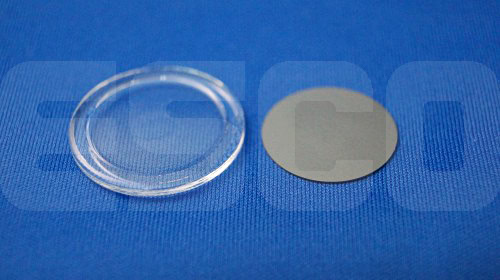
| Sample Dish | ⇒Transparent Quartz Sample Dish [AM100749-4] |
⇒Transparent Quartz Sample Dish C [ES001461-4] |
⇒Sintered SiC Sample Dish [ES000036-4] |
⇒Sintered SiC Sample Cover with Hole [PD0004-4] |
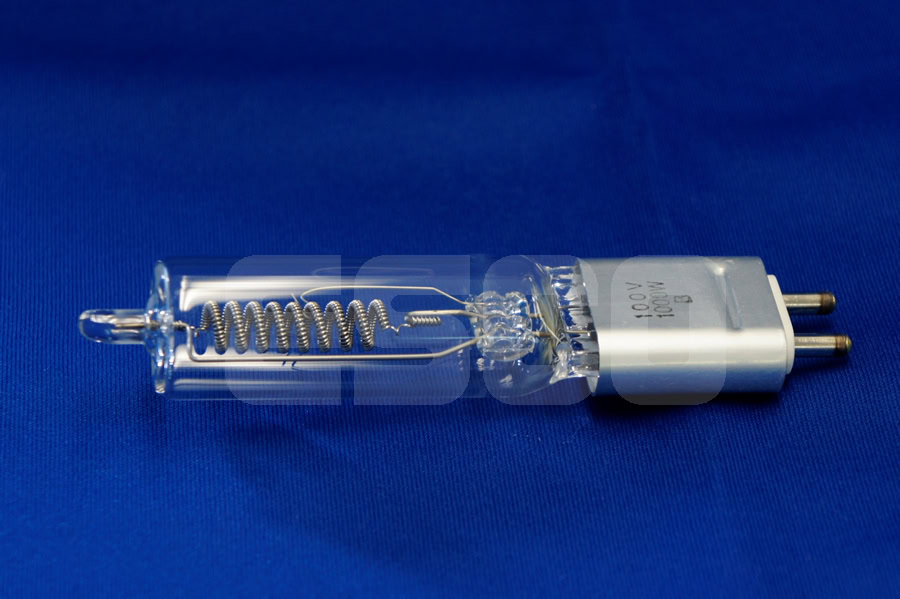
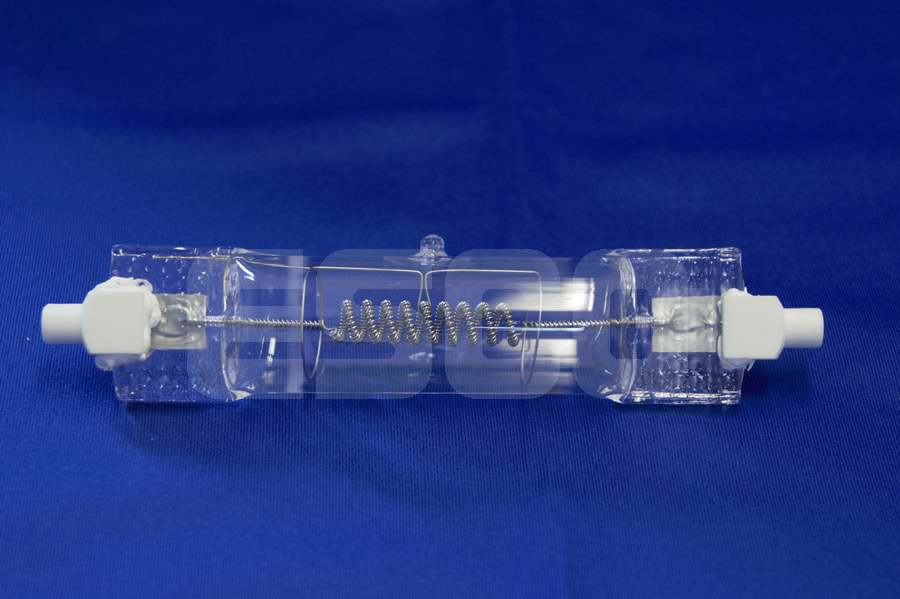
| Heating Lamp | ⇒1kW Heating Lamp | ⇒2kW Heating Lamp |



![Transparent Quartz Sample Dish [AM100749-4]](img/pop_06.jpg)
![Transparent Quartz Sample Dish C [ES001461-4]](img/pop_07.jpg)
![Sintered SiC Sample Dish [ES000036-4]](img/pop_08.jpg)
![Sintered SiC Sample Cover with Hole [PD0004-4]](img/pop_10.jpg)