










【Under Development】 Cryogenic Diffusible Hydrogen Analyzer
ESCO-TDS-100 Cryo H2
L-TDS (Low-temperature Thermal Desorption Spectrometer)
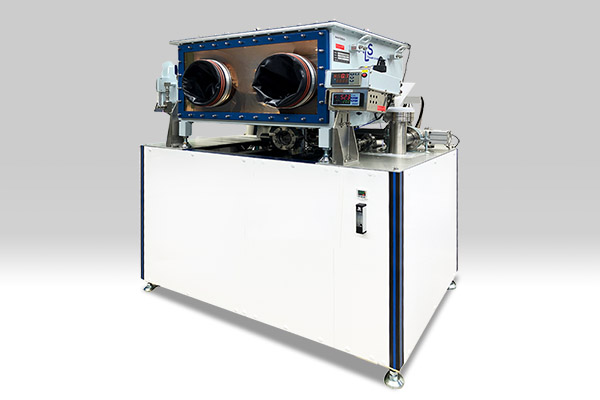 Cryogenic Diffusible Hydrogen Analyzer ESCO-TDS-100 Cryo H2|L-TDS
 Low-Temperature TDS (L-TDS): Unlocking the Core of Hydrogen Embrittlement and Delayed Fracture
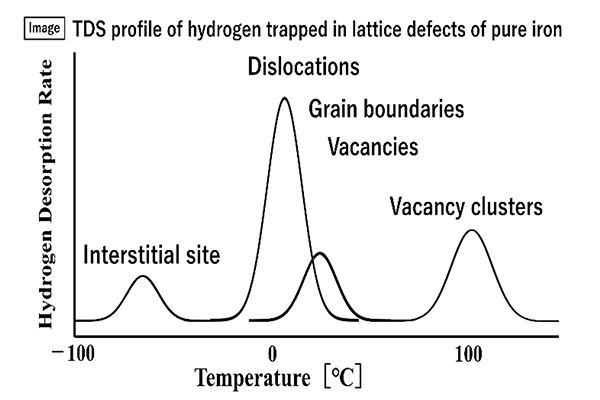
Hydrogen trapped in lattice defects—such as dislocations and atomic vacancies—has long been recognized as a critical driver in the hydrogen embrittlement (delayed fracture) of high-strength steels.
However, due to its highly volatile and transient nature at ambient temperatures, its precise analysis has remained notoriously difficult.
Currently under development, the ESCO-TDS-100 Cryo H2 addresses this long-standing challenge. By enabling precise, controlled linear heating starting from as low as −100°C,
the system clearly separates and extracts these elusive hydrogen states with high resolution.
Furthermore, engineered with meticulous and comprehensive anti-frost countermeasures, the system reliably captures the "true hydrogen desorption profile" without moisture-induced noise, serving as a powerful catalyst
for fully unraveling the fundamental mechanisms of hydrogen embrittlement.

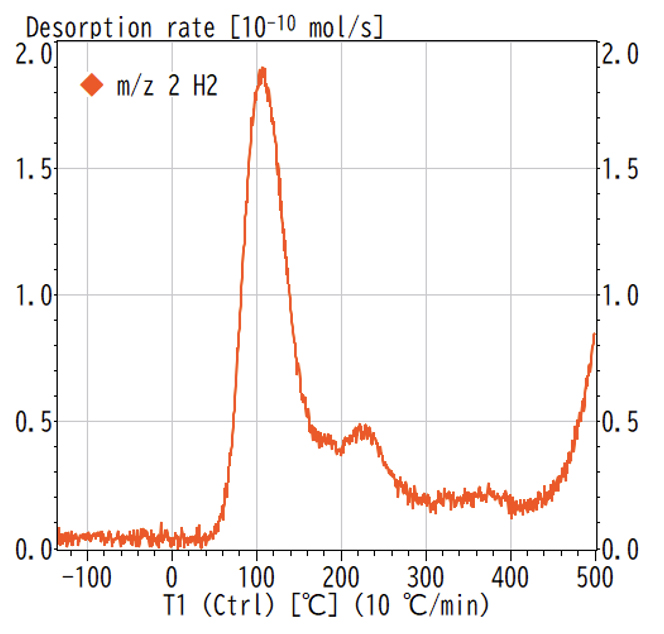
■Measurement Example: Hydrogen Thermal Desorption Profile of Electroplated Nickel
This profile displays the signal captured when the specimen was cooled with liquid nitrogen immediately after plating and subsequently heated from −135°C to 500°C.
・Temperature Range: −135°C to 500°C
・Heating Rate: 10°C/min
・Specimen: Electroplated nickel on a copper substrate
(10 × 10 mm)
